


The intriguing history surrounding Jane Dobbins Green remains an essential topic for anyone exploring the early corporate foundations of the global fast-food phenomenon. While millions worldwide understand how Ray Kroc scaled the McDonald empire into a colossal enterprise, fewer individuals grasp the intricate personal details of the figures who walked beside him during his rise. This extensive biographical analysis unpacks the journey of Jane Dobbins Green, tracing her origins from early American roots through her high-profile marriage, her career background, and her choice to spend her later decades far away from public scrutiny.
| Feature | Detail |
| Full Name | Jane Dobbins Green |
| Date of Birth | November 22, 1911 |
| Date of Death | August 7, 2000 |
| Place of Birth | Walla Walla, Washington, USA |
| Spouse | Ray Kroc (m. 1963–1968) |
| Profession | Secretary and Celebrity Spouse |
The early life of Jane Dobbins Green began in the quiet Pacific Northwest region of the United States. Born in Walla Walla, Washington, she grew up during a period of immense industrial and social transformation across the American landscape. Her parents, Warren David Dobbins and Myrtle Duncan Frechette, raised her within a traditional household that valued hard work and community stability. Although detailed archives regarding her childhood remain sparse, local records indicate that she experienced a standard upbringing typical of the era, cultivating values of resilience and independence that would eventually serve her well in later professional environments.

Seeking greater opportunities beyond her hometown, Jane Dobbins Green eventually transitioned to the bustling cultural hubs of California. The dynamic environment of the West Coast offered numerous avenues for ambitious individuals looking to establish a professional foothold. During this formative chapter, she focused heavily on refining her administrative talents and corporate capabilities. Her dedication to professional excellence allowed her to navigate competitive job markets successfully, securing positions that required exceptional organizational competency, discretion, and interpersonal finesse. This period laid a solid foundation for her future endeavors within high-profile social and professional circles.
One of the most fascinating facets of the life of Jane Dobbins Green involves her reported tenure working closely within the entertainment industry. Historical accounts indicate that she spent time serving as a trusted secretary for legendary Hollywood motion picture icon John Wayne. Operating inside the inner circles of classic cinema required absolute confidentiality, sharp administrative skills, and a steady temperament under pressure. Managing the daily schedules and correspondence of such a prominent public figure demonstrated her exceptional capability to handle high-stress corporate and personal environments with absolute grace, poise, and professional integrity.
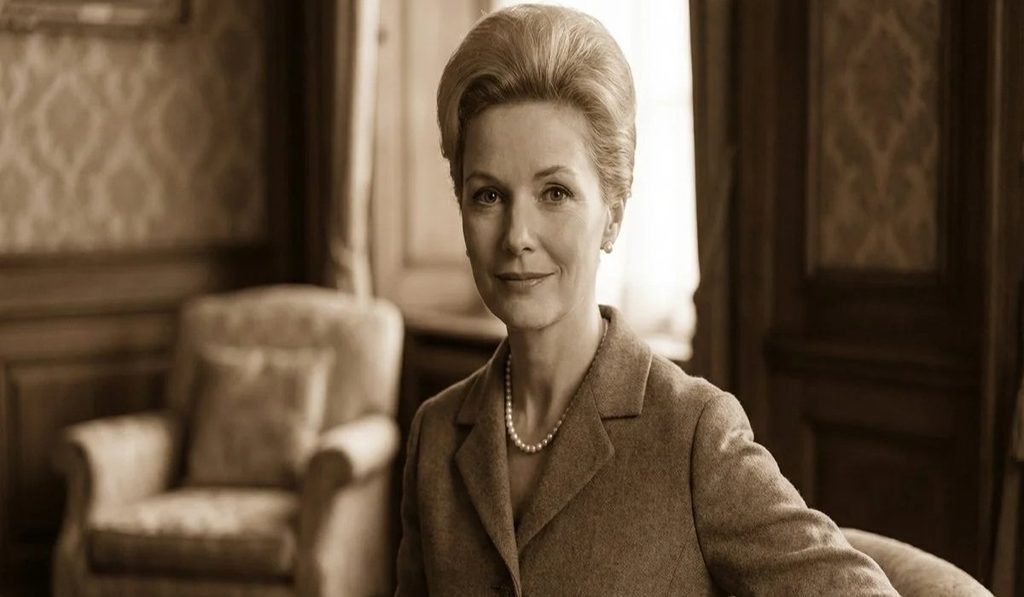
The trajectory of Jane Dobbins Green shifted dramatically when she crossed paths with ambitious businessman Ray Kroc. At the time of their initial encounter, Kroc was aggressively expanding the operational footprint of McDonald across the United States. Their meeting brought together two distinct worlds—corporate ambition and refined administrative composure. As Kroc traveled extensively to build his restaurant empire, his interactions with individuals outside his immediate business sphere introduced him to fresh perspectives. This developing connection ultimately paved the way for a deeper romance that would place Jane directly into the history books.
In February 1963, Jane Dobbins Green officially married Ray Kroc, stepping into a world of immense wealth and burgeoning corporate influence. This union occurred just as the fast-food chain was solidifying its status as an American cultural institution. As the wife of the chief executive, Jane found herself positioned adjacent to unprecedented commercial success. However, navigating the lifestyle of a high-profile corporate titan presented unique challenges. The demands of Kroc’s relentless schedule meant that their domestic life was frequently subjected to public curiosity, media scrutiny, and the constant pressures of corporate expansion.
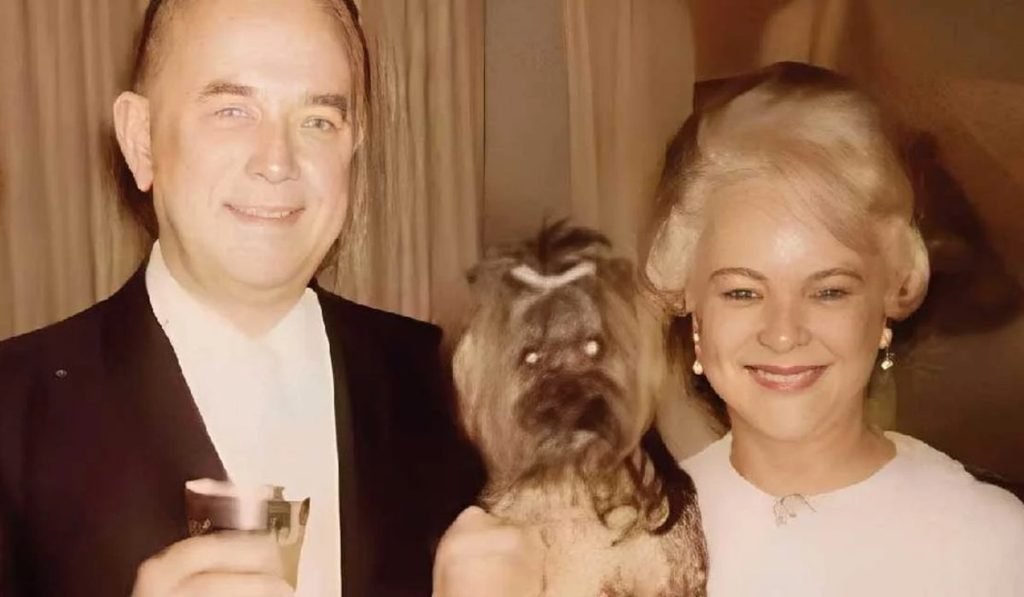
Living as the spouse of a billionaire industrialist placed Jane Dobbins Green inside an elite social tier. She attended high-profile corporate gatherings, mingled with prominent business leaders, and witnessed firsthand the staggering growth of the fast-food industry from an insider’s vantage point. Despite the glamour associated with this status, maintaining personal privacy proved exceedingly difficult. The corporate environment engineered by her husband demanded total dedication to his vision, leaving very little room for quiet domestic tranquility. Nonetheless, Jane handled her role within the executive ecosystem with characteristic dignity and measured poise throughout her tenure as a spouse.
The marital journey of Jane Dobbins Green and Ray Kroc ultimately spanned approximately five years, officially concluding with separation proceedings in 1968. During this relatively short window, the corporate empire experienced exponential scaling, which placed severe strains on personal relationships. While the partnership did not produce any children, it marked a crucial transitional era for Kroc personally between his long-term first marriage and his subsequent union. Observers of corporate history often view this five-year chapter as a high-intensity period defined by contrasting personal priorities and conflicting lifestyle demands.
Following the finalization of their divorce in 1968, Jane Dobbins Green made a conscious and deliberate choice to step away entirely from public visibility. Unlike many individuals tied to famous executives who chase ongoing celebrity status, Jane preferred a quiet, unpretentious existence. She avoided media interviews, declined to write tell-all memoirs, and successfully safeguarded her personal boundaries. This strategic withdrawal allowed her to reclaim her autonomy, rebuilding a peaceful daily routine far away from the relentless flashbulbs, gossip columns, and corporate pressures that had characterized her years with Kroc.
The post-divorce era for Jane Dobbins Green was marked by steadfast discretion and personal peace. While public fascination with the origins of corporate empires continually stoked interest in Ray Kroc’s former partners, Jane remained a phantom to mainstream biographers. She cultivated deep friendships, pursued private interests, and enjoyed the simple comforts of a life unburdened by corporate obligations. Her ability to completely vanish from the public eye speaks volumes about her character, demonstrating that she valued personal tranquility and genuine human connection far above superficial fame and transient media attention.
In her later years, Jane Dobbins Green found renewed companionship and long-term stability when she married Paul D. Whitney in 1984. This union provided a stark contrast to her high-intensity marriage from decades prior, offering a quiet, supportive environment where she could spend her golden years in contentment. Paul Whitney remained a devoted partner until her passing, sharing a peaceful life in Southern California. This chapter of her life illustrated her capacity for enduring love and her successful pursuit of a balanced, harmonious domestic existence away from the corporate storms of her past.
Southern California served as the primary backdrop for the latter half of the life of Jane Dobbins Green. Settling into the vibrant yet relaxed atmosphere of the Los Angeles area, she enjoyed the favorable climate, cultural offerings, and community amenities of the region. Her home became a sanctuary of calm where she could reflect on a long life well-lived. Neighbors and acquaintances frequently remembered her as a dignified, courteous, and fiercely private woman who carried herself with timeless elegance, remaining perpetually gracious while fiercely protecting the quiet sanctuary she had carefully built for herself.
Although her time in the national spotlight was relatively brief, the historical footprint of Jane Dobbins Green remains permanently linked to the foundational lore of modern American commerce. Business historians examining the human elements behind multinational corporations frequently encounter her name when mapping out the personal timeline of Ray Kroc. Rather than being defined solely by a famous marriage, her narrative encompasses professional competence, personal resilience, and the ultimate wisdom of choosing peace and privacy over the turbulent demands of corporate celebrity culture.
The overarching narrative of Jane Dobbins Green is perhaps most defined by her remarkable restraint. In an era where public figures often court attention at every turn, Jane’s commitment to absolute silence regarding her high-profile divorce stands as a masterclass in personal dignity. She refused to let her identity be permanently hyphenated by another person’s commercial success, choosing instead to author the final chapters of her life on her own terms. This steadfast commitment to personal integrity earned her the quiet respect of those rare individuals who understood the immense pressures she navigated.
As she entered her late eighties, Jane Dobbins Green maintained her quiet lifestyle in California. On August 7, 2000, she passed away peacefully from natural causes at the age of 88 in Los Angeles. Her passing closed the final chapter on a life that bridged classic Hollywood administrative work and the upper echelons of corporate American history. Following her death, she was laid to rest at Westwood Memorial Park in Los Angeles, leaving behind a legacy characterized by quiet grace, professional achievement, and an unwavering dedication to personal privacy.
The enduring takeaway from the journey of Jane Dobbins Green centers on her fierce independence and self-possession. Whether managing high-stakes executive schedules in Hollywood, navigating the complex realities of marrying a billionaire tycoon, or retreating into peaceful anonymity, she consistently demonstrated complete control over her personal narrative. Her ability to transition through vastly different social strata without losing her core identity ensures that she remains a compelling figure for researchers studying the hidden human dimensions behind legendary American business dynasties.
Reviewing the full scope of the life of Jane Dobbins Green reveals a remarkable tapestry spanning nearly an entire century of American history. From her beginnings in Washington State to her professional contributions in California, and from her high-visibility marriage to her peaceful final decades, she lived a life defined by distinct contrasts. Her story serves as a reminder that behind every major historical footnote lies a complex, multidimensional human being who navigated the triumphs and trials of existence with quiet strength, steadfast dignity, and unyielding personal resolve.
The inclusion of Jane Dobbins Green in broader corporate discussions highlights how personal relationships frequently intersect with monumental commercial achievements. While corporate textbooks often prioritize balance sheets, expansion metrics, and marketing strategies, the human infrastructure supporting major executives provides critical context. Jane’s presence during a vital growth phase of the restaurant industry ensures her place in the historical record, prompting modern analysts to appreciate the diverse personal backgrounds of the individuals who shared space with corporate pioneers during their rise to global prominence.
Ultimately, the life story of Jane Dobbins Green transcends her association with a famous corporate name. She was an accomplished professional, a loyal partner, and a woman who understood the profound value of maintaining her inner peace amidst external chaos. By choosing dignity over drama and obscurity over celebrity, she secured a legacy defined by self-respect and tranquility. Her journey continues to captivate those who seek to understand the nuanced, multifaceted human stories woven into the rich fabric of twentieth-century American corporate history.