

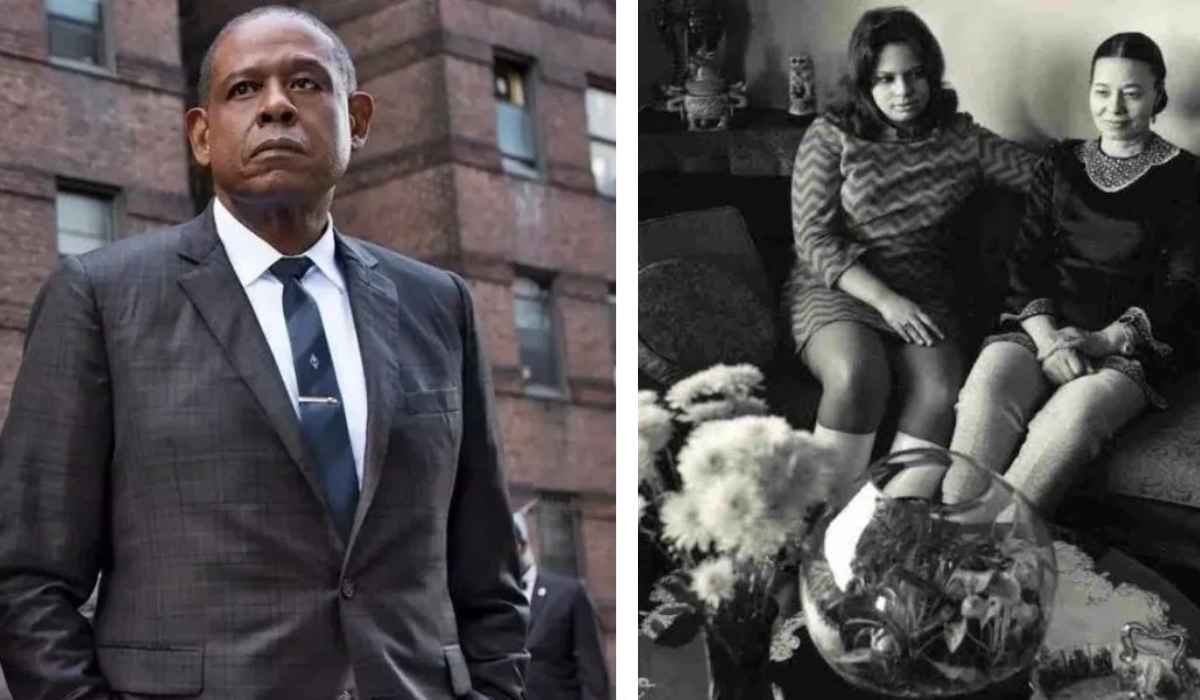
The story of Elise Johnson is closely connected to the history of Harlem, New York, and the complicated legacy of Ellsworth “Bumpy” Johnson. Although her father became famous for his influence in Harlem’s underworld, information about his daughter’s personal life remains limited. Interest in her family has grown because of historical accounts, online biographies, and the television drama Godfather of Harlem. However, it is important to distinguish documented family history from dramatic storytelling and unverified claims. This article explores her reported family background, relationship with her father, connection to Harlem, and the reasons her story continues to attract readers.
| Quick Bio Detail | Information |
|---|---|
| Name | Elease Johnson, also spelled Elise Johnson |
| Known for | Reported daughter of Bumpy Johnson |
| Father | Ellsworth “Bumpy” Johnson |
| Stepmother | Mayme Hatcher Johnson |
| Reported sister | Ruthie Johnson |
| Reported daughter | Margaret Johnson |
| Family connection | Harlem, New York City |
| Birth date | Not reliably established |
| Education | Publicly documented details are limited |
| Profession | No reliably established public career |
| Reported year of death | 2006, according to secondary accounts |
| Television connection | Godfather of Harlem features a character named Elise Johnson |
Elise Johnson is commonly described in online biographies as a daughter of Harlem crime figure Bumpy Johnson. Unlike her father, she did not become a widely documented public personality. Information about her childhood, education, relationships, and adult experiences is scattered across secondary sources, making a complete biography difficult to establish. Her name also attracts attention because a character with the same name appears in Godfather of Harlem. Readers researching her life should remember that the historical woman and the television character are not automatically identical in every detail. A responsible account acknowledges the family connection while avoiding unsupported claims about her private experiences.

Some publications spell the name Elease Johnson, while others use Elise Johnson. This variation can complicate online research because articles may discuss the historical family member, the television character, or both without clearly explaining the distinction. The spelling Elease appears in several biographies about Bumpy Johnson’s family, whereas Elise is the name used for the character portrayed in Godfather of Harlem. When researching family history, readers should compare the context and evidence rather than assume that every article describes exactly the same person. Careful spelling and source checking are essential for separating historical information from entertainment-related material.
Reliable information about Elise Johnson’s early years is limited, and publicly accessible sources do not establish a complete timeline of her childhood. Her family connection placed her within the story of Harlem during a period when neighbourhood life was shaped by racial inequality, economic challenges, political change, and organised crime. However, it would be misleading to invent specific childhood memories, school experiences, or personal ambitions without dependable evidence. Understanding her background requires considering the historical environment around her family while recognising that the details of her individual life remain largely undocumented.
Ellsworth Raymond Johnson, widely known as Bumpy Johnson, was a prominent organised crime figure associated with Harlem during the twentieth century. His reputation grew through his involvement in illegal gambling, relationships with underworld associates, and influence within neighbourhood networks. His life later inspired books, films, and television productions that introduced his name to new generations. Although popular culture frequently portrays him as a powerful and charismatic figure, his criminal activities also formed part of a broader history of exploitation and violence. His family’s story deserves consideration beyond the mythology surrounding his public reputation.
The Johnson family has attracted public curiosity because of Bumpy Johnson’s historical reputation. His wife, Mayme Hatcher Johnson, later shared her perspective on their marriage and life together through the book Harlem Godfather: The Rap on My Husband, Ellsworth “Bumpy” Johnson. Her account offers a valuable family perspective, although memoirs naturally reflect the experiences and viewpoints of their authors. Information about other relatives is less comprehensive. Readers investigating the family should compare memoirs, obituaries, historical records, and reputable reporting instead of treating every online biography as equally reliable.
Many secondary biographies identify Elise or Elease Johnson as Bumpy Johnson’s daughter from a relationship before his marriage to Mayme Hatcher. Nevertheless, detailed documentation of their relationship is difficult to locate in widely accessible sources. It is therefore not possible to reconstruct every aspect of their personal bond with confidence. His reputation, wealth, and criminal associations would have made the family name distinctive, but their precise effect on his daughter’s daily life remains uncertain. The most responsible approach is to acknowledge the reported relationship without inventing conversations, emotional experiences, or specific family incidents.
Mayme Hatcher Johnson married Bumpy Johnson in 1948 and remained connected to his story until his death in 1968. She became an important source for understanding the family through her memoir and public recollections. Some accounts describe Elease as Mayme’s stepdaughter rather than her biological daughter, an important distinction when examining family relationships. Mayme’s perspective also helps researchers understand how the Johnson household existed alongside her husband’s criminal reputation. Her memoir is a useful starting point for readers interested in the family’s history, although individual details should still be checked against other sources.
Secondary biographies commonly mention Ruthie Johnson as another daughter associated with Bumpy Johnson’s family. Accounts differ in how they describe the sisters’ maternal relationships, and the publicly available evidence is not sufficiently comprehensive to resolve every discrepancy. This uncertainty makes it important to avoid presenting conflicting family claims as established facts. Family relationships can be difficult to reconstruct when relatives lived privately and surviving records are limited. For anyone researching the Johnson family, the best approach is to distinguish between reported relationships, independently documented information, and details that remain uncertain.
Harlem provides essential context for understanding the Johnson family’s place in American history. During the twentieth century, the neighbourhood became a major centre of Black cultural expression, political organising, music, literature, and community life. It also experienced housing discrimination, economic inequality, and criminal activity. Bumpy Johnson’s reputation developed within this complicated environment, where informal networks and underground economies sometimes intersected with ordinary neighbourhood life. The history of Harlem cannot be reduced to organised crime alone. Its cultural achievements, residents, institutions, and civil rights struggles offer a much broader perspective on the world surrounding the Johnson family.
There is no sufficiently reliable public record establishing Elise Johnson’s educational qualifications, schools, or professional training. Some online articles offer descriptions of her life without providing primary documents or clear sourcing. Such claims should be approached carefully because repetition across websites does not necessarily establish historical accuracy. Education is an important part of most biographies, but an honest article must acknowledge when the evidence is unavailable. Without dependable records, it is not possible to describe her academic achievements, identify particular teachers, or explain how her education influenced her later decisions.
Another unanswered question concerns Elise Johnson’s occupation. Unlike her father, whose activities attracted considerable public and law-enforcement attention, she does not have a well-established public career documented in widely recognised historical sources. Some websites repeat claims about her personal struggles and activities, but those claims are not consistently supported by independently verifiable evidence. Consequently, assigning her a particular profession or describing a detailed employment history would be speculative. Her limited public profile illustrates an important distinction between being related to a famous person and having a documented public identity of one’s own.
Information about Elise Johnson’s romantic relationships, marriage, and private friendships is scarce. No comprehensive, independently verified public biography provides a dependable account of these aspects of her life. This lack of information should not be interpreted as proof that she had no relationships or meaningful personal experiences. Rather, it reflects the limitations of the surviving public record. A respectful biography does not need to fill every gap with speculation. Readers can understand her place in the family and the historical context without being given unverified details about intimate matters.
Several secondary biographies identify Margaret Johnson as the daughter of Elease Johnson and the granddaughter of Bumpy Johnson. However, the available online accounts vary in quality and do not always provide clear primary-source documentation for every family connection. Readers should therefore treat the relationship as reported rather than assume that every published detail has been independently established. Margaret Johnson is also mentioned in accounts of the wider family’s later history. Exploring these connections can help readers understand why interest in the Johnson family extends beyond Bumpy himself, while leaving unresolved details clearly identified.
Margaret Johnson is often discussed in connection with her reported grandfather, Bumpy Johnson. Her name appears in accounts about later generations of the family, demonstrating how public interest in a famous historical figure can extend to children and grandchildren. However, the details of her personal life should be approached independently rather than inferred from her grandfather’s reputation. Family members can have experiences, interests, and identities entirely separate from those of a well-known relative. Reliable biographies and documented reporting are especially valuable when researching descendants who did not maintain a major public profile.
Some secondary biographies report that Elease Johnson died in 2006. Nevertheless, a detailed, authoritative public record establishing her complete life story and the circumstances of her death is not readily available in the sources reviewed. Claims about the precise cause of death should therefore be treated cautiously unless supported by reliable documentation. Online accounts sometimes repeat specific explanations without linking to official records or contemporary reporting. For readers searching for an accurate biography, the distinction between a reported year of death and a verified explanation of the circumstances is important.
Bumpy Johnson died on July 7, 1968, after suffering a heart attack in New York City. His death marked the end of a significant chapter in Harlem’s underworld history, but his name continued to attract attention through books, films, and accounts of organised crime. His family subsequently became part of the public discussion surrounding his legacy. The effect of his death on individual relatives is not comprehensively documented, so specific emotional reactions should not be invented. His passing nevertheless provides an important chronological point when examining the family’s later history.
Mayme Hatcher Johnson’s memoir, Harlem Godfather: The Rap on My Husband, Ellsworth “Bumpy” Johnson, is an important resource for people researching the family. Published in 2008, the book presents her perspective on her husband’s life, their relationship, and the world in which they lived. It offers a different angle from crime-focused accounts that concentrate primarily on Bumpy’s reputation and activities. Readers interested in Elise Johnson’s family background may find the memoir useful as a starting point. However, it should be read alongside independent historical material rather than treated as a complete biography of every relative.
The television series Godfather of Harlem introduced a character named Elise Johnson, portrayed by actress Antoinette Crowe-Legacy. The programme follows Bumpy Johnson’s return to Harlem after prison and explores conflicts involving organised crime, politics, and social change. Elise’s storyline brings family relationships into the drama, allowing viewers to see how a criminal figure’s decisions can affect the next generation. However, the series is a fictionalised production rather than a documentary. Its dialogue, personal conflicts, and character development should not automatically be accepted as evidence about the historical family.
Antoinette Crowe-Legacy plays Elise Johnson in Godfather of Harlem. Her performance explores a complicated character whose experiences involve addiction, family tension, and political awakening. The actress has discussed the opportunities involved in portraying a character who changes significantly throughout the series. Her interpretation has helped bring renewed attention to the name Elise Johnson among viewers researching the real-life family. Nevertheless, an actor’s performance reflects a scripted role, and it cannot establish undocumented facts about the historical woman. The distinction is essential for readers seeking an accurate biography rather than an entertainment recap.
In Godfather of Harlem, Elise’s storyline intersects with Malcolm X, the prominent Black Muslim minister and civil rights advocate. Their connection helps the programme explore political awareness, community responsibility, and the changing social climate of the 1960s. The series uses this relationship to examine the tensions between personal struggles and broader political commitments. However, viewers should not assume that every interaction shown on screen occurred in real life. Without independent historical evidence, specific conversations, relationships, and events involving the historical Elise cannot be confirmed simply because they appear in the television drama.

Later storylines in Godfather of Harlem portray Elise becoming involved with the Black Panther Party. This development gives her character a political direction and connects her fictional experiences with wider debates about racial inequality, community protection, and Black political activism. The real Black Panther Party was founded in 1966 and became known for its political programme and community initiatives. Although the historical movement is well documented, Elise’s specific involvement as depicted in the series should be understood as part of the programme’s storytelling unless independently verified. Historical context and fictional character development are related but distinct subjects.
Research into Elise Johnson presents a common challenge in family history: a famous relative may leave behind extensive documentation while other family members remain largely absent from public records. Online articles sometimes repeat the same claims without providing original documents, interviews, or reliable citations. This can make uncertain details appear more authoritative than they really are. A careful biography should separate information supported by reputable sources from statements that are merely repeated. In this case, the spelling of her name, precise family relationships, personal history, and reported circumstances of death deserve particular caution.
Interest in Bumpy Johnson’s family continues because people want to understand the private lives behind a famous historical figure. Crime dramas often introduce viewers to relatives who were previously unfamiliar to the public, encouraging further searches for biographies and family histories. These searches can be useful when they lead readers toward credible books and historical records. However, they can also encourage speculation when reliable information is scarce. The story of Elise Johnson illustrates why responsible historical writing should value accuracy over sensational claims and recognise that private individuals deserve fair treatment in public accounts.
The most effective way to understand the Johnson family is to divide available information into three categories: documented historical facts, claims repeated by secondary sources, and events created for television. Bumpy Johnson’s marriage to Mayme Hatcher and his death in 1968 are documented elements of his biography. Details about Elise’s personal experiences are considerably less complete. The television series supplies a fuller narrative, but dramatic scenes cannot fill historical gaps by themselves. Keeping these categories separate helps readers develop a more balanced understanding of the family’s history and avoids presenting speculation as established fact.
Reliable biographies, contemporary newspaper reports, obituaries, memoirs, and archival records are valuable when researching historical families. Each source has strengths and limitations. A memoir may provide personal insight, while an obituary may confirm family relationships or a reported date of death. Academic histories can explain the broader social environment without claiming to know every private detail. By contrast, an unsourced website may repeat information from another article without independently verifying it. Anyone writing about the Johnson family should compare sources carefully and clearly identify uncertainty when the evidence does not support a definite conclusion.
The Johnson family’s place in public memory extends beyond the reputation of Bumpy Johnson. His life remains a subject of interest because it intersects with Harlem’s history, organised crime, racial inequality, and American popular culture. His wife Mayme’s memoir contributes a family perspective, while modern television adaptations bring new audiences to the subject. Other relatives, including those identified as Elise or Elease, receive attention largely through their reported family connections. Their stories remind readers that a historical legacy can involve many individuals whose lives are not equally documented or understood.
Searches for Elise Johnson often come from people who have watched Godfather of Harlem or encountered stories about Bumpy Johnson. Readers naturally want to know whether the character represents a real person, what is known about her family, and how much of the television storyline reflects documented history. These are reasonable questions, but the available evidence does not answer all of them. The best approach is to provide the information that can be responsibly supported while acknowledging what remains unknown. Doing so produces a more trustworthy biography than one that fills every gap with invented details.
Elise Johnson remains a subject of public curiosity because of her reported connection to Bumpy Johnson and the similarly named character in Godfather of Harlem. Although secondary sources describe her as a member of the Johnson family, her complete personal biography is not firmly established in widely available historical records. Her story demonstrates the importance of researching family history carefully, checking claims against reliable evidence, and distinguishing television drama from documented events. Readers seeking further information should begin with Mayme Hatcher Johnson’s memoir and established historical biographies of Bumpy Johnson. These resources provide a stronger foundation for understanding the family’s place in Harlem’s history.